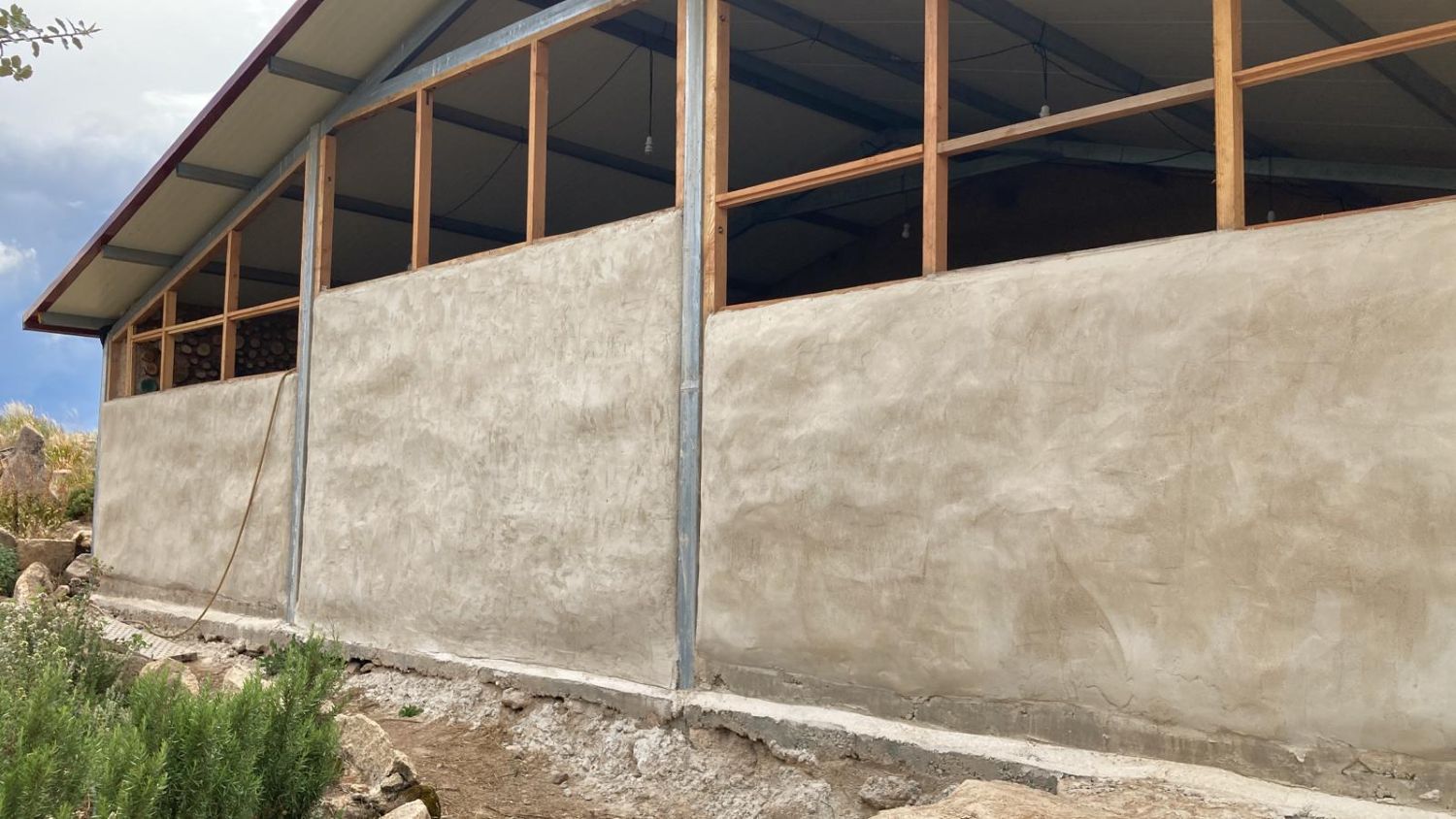
Wattle and Daub
Twigs, clay and a bit of patience – one of the world's oldest building techniques, and still one of the most satisfying.
Where woven wood meets clay
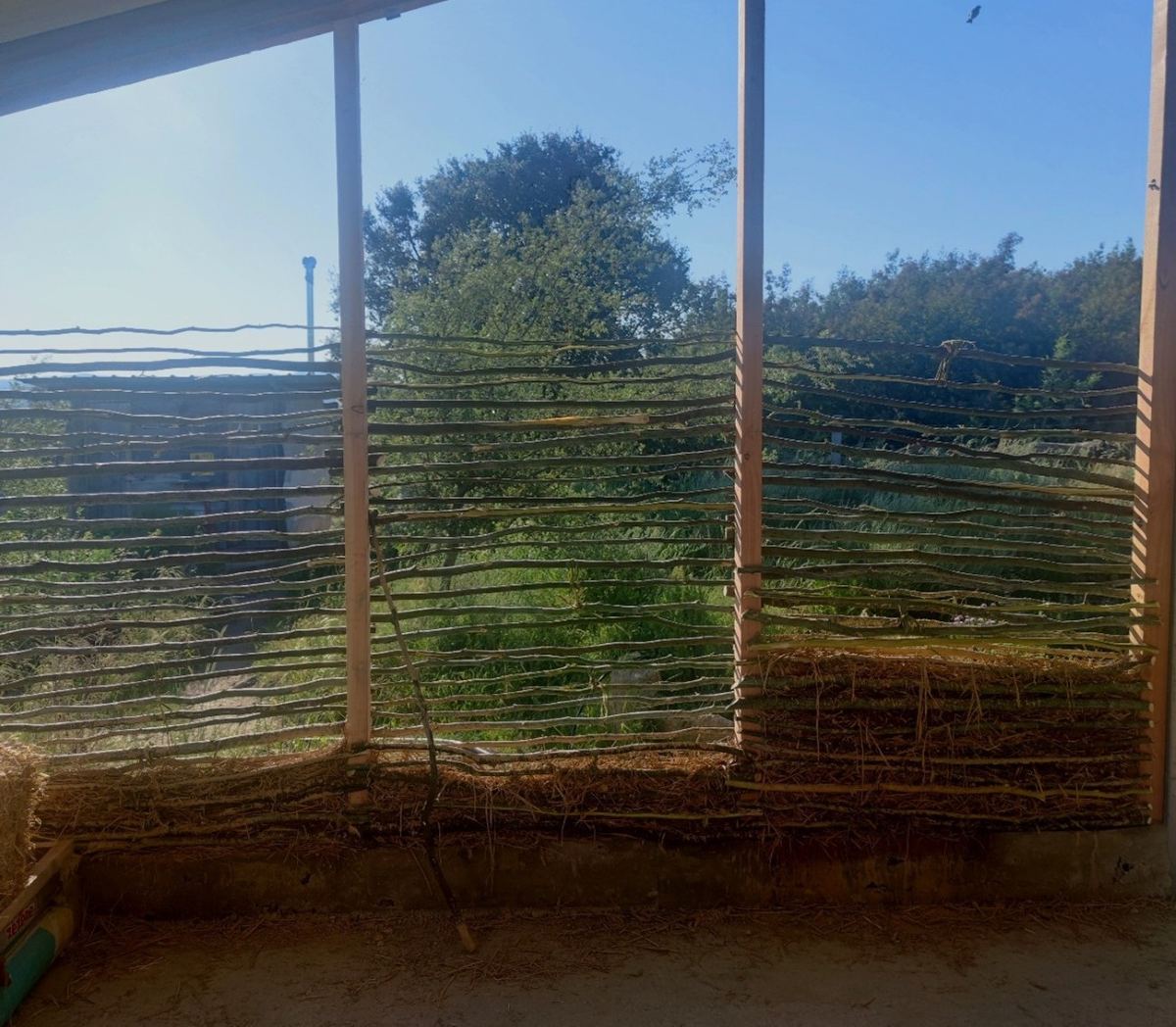
The idea is beautifully simple. You weave slender branches between upright stakes to create a panel – the “wattle”. Then you pack and plaster it with a clay-based mix – the “daub”. The technique is primarily used for non-load-bearing interior walls and partition walls within timber frames.
Wall thickness typically runs between 50 and 150 mm – slim enough for partitions, yet with real thermal mass and natural moisture regulation. Double-wall systems can even be filled with extra insulation for better thermal performance.
Why choose wattle and daub?
Ideal for interior walls
Perfect as a partition wall or room divider in timber-frame buildings – lightweight, natural and healthy.
Local Materials
Branches, clay, straw – everything comes from your immediate surroundings.
Healthy Indoor Climate
Fully breathable and moisture-regulating – the wall works with the room, not against it.
Thermal Mass
Stores warmth and releases it slowly – particularly good for old building retrofits.
Easy to Add On
Can be fixed to existing interior walls to boost comfort and bring energy bills down.
DIY-Friendly
Straightforward technique, minimal tools, and genuinely satisfying to build by hand.
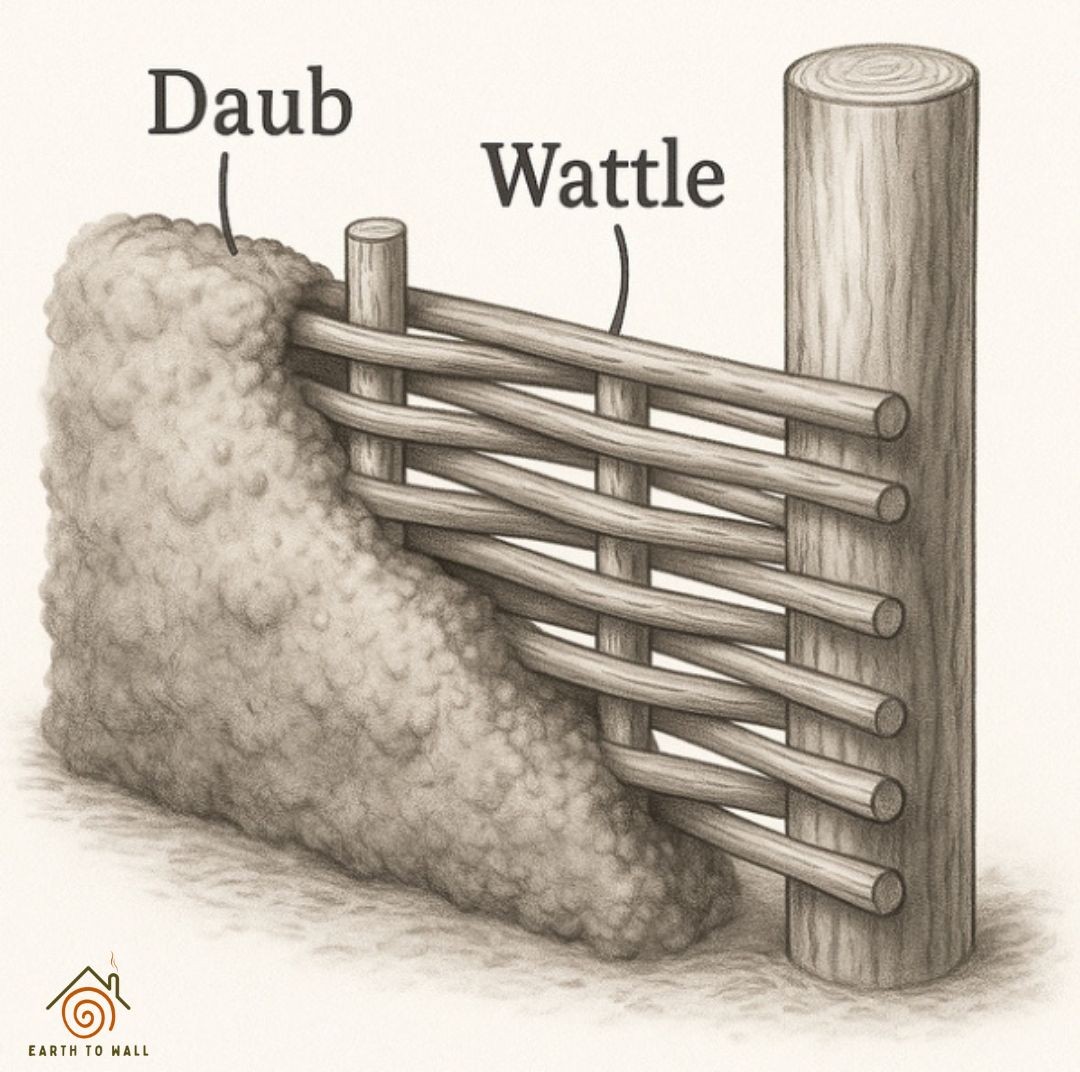
The wattle & the daub
You start with a timber frame and a woven infill. The weave itself can be put together in a few different ways:
- Split hazel rods or willow branches, woven between upright stakes
- Bamboo, tied in place with string or wire
- Wooden laths or lattice, screwed onto posts
The daub is a mix of subsoil clay, sand and straw – packed onto the wattle from both sides and worked in well. A finishing coat of clay or lime plaster gives the wall its final surface.
Three ways to build
Classic Infill
The woven panel sits between timber posts as a non-load-bearing interior or partition wall – packed with clay daub, solid and long-lasting.
Double Wall with Insulation
Two wattle-and-daub layers with a gap between them, filled with lightweight clay or sheep's wool for noticeably better thermal performance.
Energy Retrofit
Adding a wattle-and-daub layer to an existing interior wall increases thermal mass and makes a real difference to both comfort and running costs.
Want to go deeper?
In the newsletter I regularly share practical knowledge, projects and tips on natural building and renovation.
Subscribe to newsletter →