Rammed Earth
Earth, compacted layer by layer – solid, long-lasting, timeless.
Pisé – earth as a building material
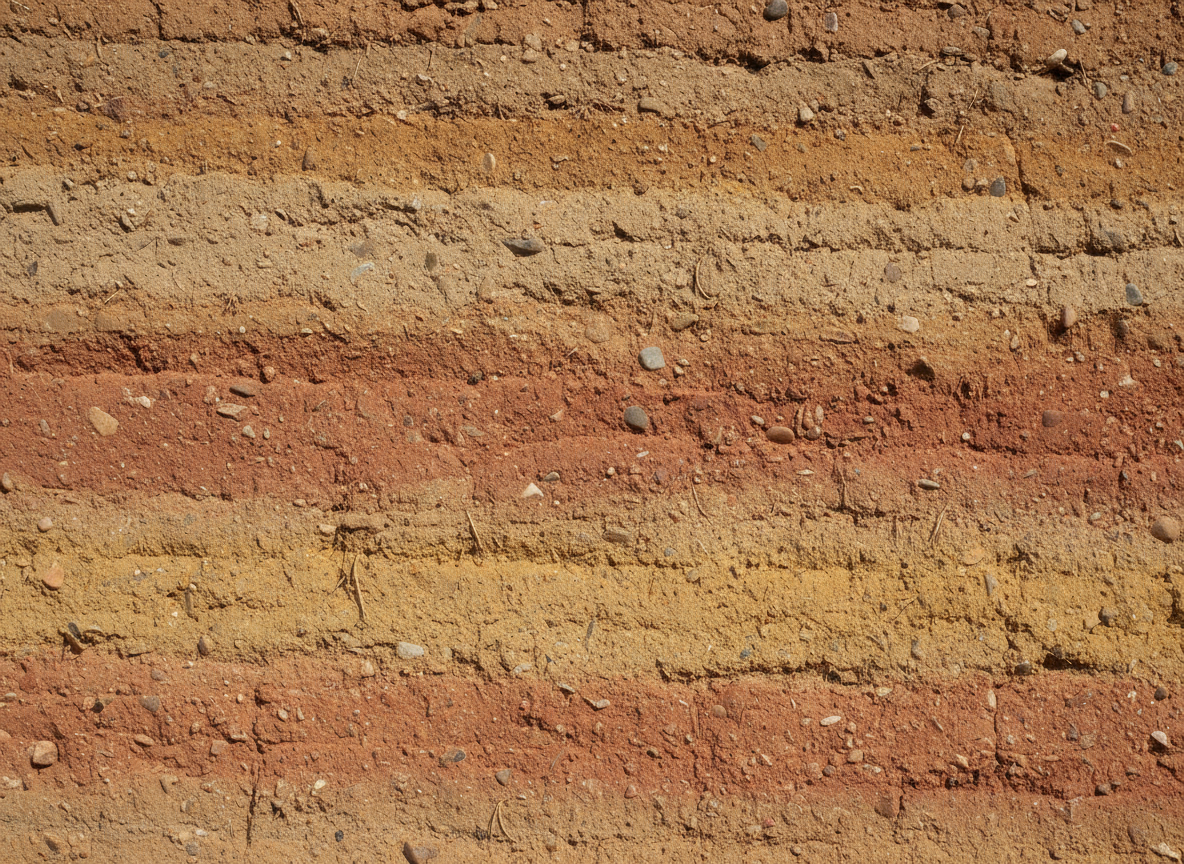
In rammed earth construction, a clay-rich mixture is packed into formwork in layers and compacted. Once the formwork comes off, you're left with a self-supporting wall that hardens in the air – no cement, no kiln required.
The result: incredibly solid walls with a bulk density of 1,700 to 2,200 kg/m³ – and a distinctive layered pattern that makes every wall one of a kind.
Why Rammed Earth?
Exceptional strength
Bulk density of 1,700–2,200 kg/m³ – rammed earth handles structural loads like concrete, without a gram of cement.
Thermal mass
Soaks up heat during the day and releases it at night – natural climate regulation, no technology needed.
Seamless floors
Works just as well underfoot as it does in walls – ideal for solid, jointless earthen floors.
Durable & low-maintenance
Built right, it needs almost no upkeep for decades. The Alhambra has been standing for centuries.
Natural colour variation
The colour comes from the earth itself – adjustable with natural pigments to suit any aesthetic.
Local earth
In many cases, the excavation material from the site can be used directly – minimal transport, minimal waste.
What you need
The mix
Good rammed earth is roughly 50–75% gravel and sand, with 20–35% silt and clay. The mix needs to be just barely moist and crumbly – not wet, not bone dry. A simple squeeze test will tell you if you've got it right.
Binders
In Europe, rammed earth is typically built without any binder – the earth holds together through compaction alone. Lime or cement can be added, but they compromise the wall's natural moisture-regulating properties.
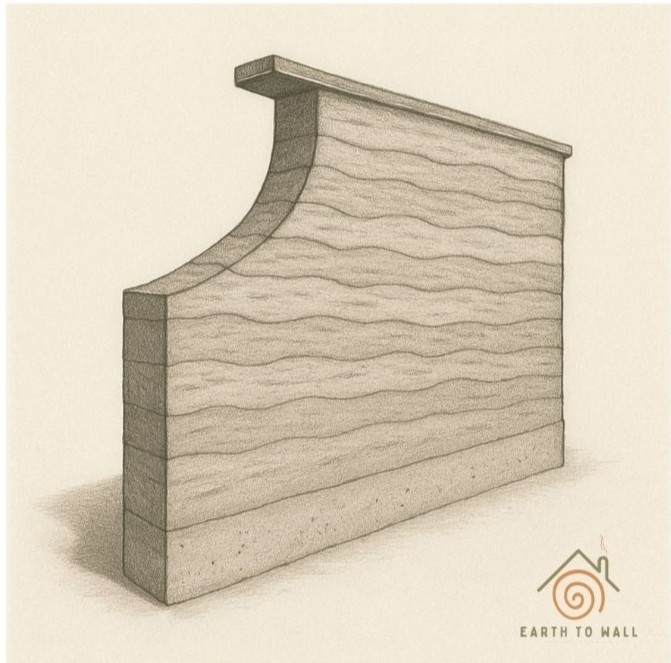
Schematic diagram of a rammed earth wall
Step by step
Set up the formwork
Build sturdy formwork that can take the compaction pressure. The quality of your formwork determines how clean and precise the wall turns out.
Fill in layers
Add the earth-moist mix in 10–15 cm layers – no more, so each one can be compacted evenly.
Compact
Tamp each layer by hand or with a mechanical rammer until it's firm and dense. This is where the characteristic layered look comes from.
Strip the formwork
You can remove it straight away – no curing time needed. The wall stands on its own immediately.
Let it dry
Wait for the wall to dry out completely before loading it. Depending on the climate, this can take a few weeks.
Finish the surface
Optional: a coat of clay plaster, lime plaster or natural oil for extra protection and a polished look.
Want to go deeper?
In the newsletter I regularly share practical knowledge, projects and tips on natural building and renovation.
Subscribe to newsletter →