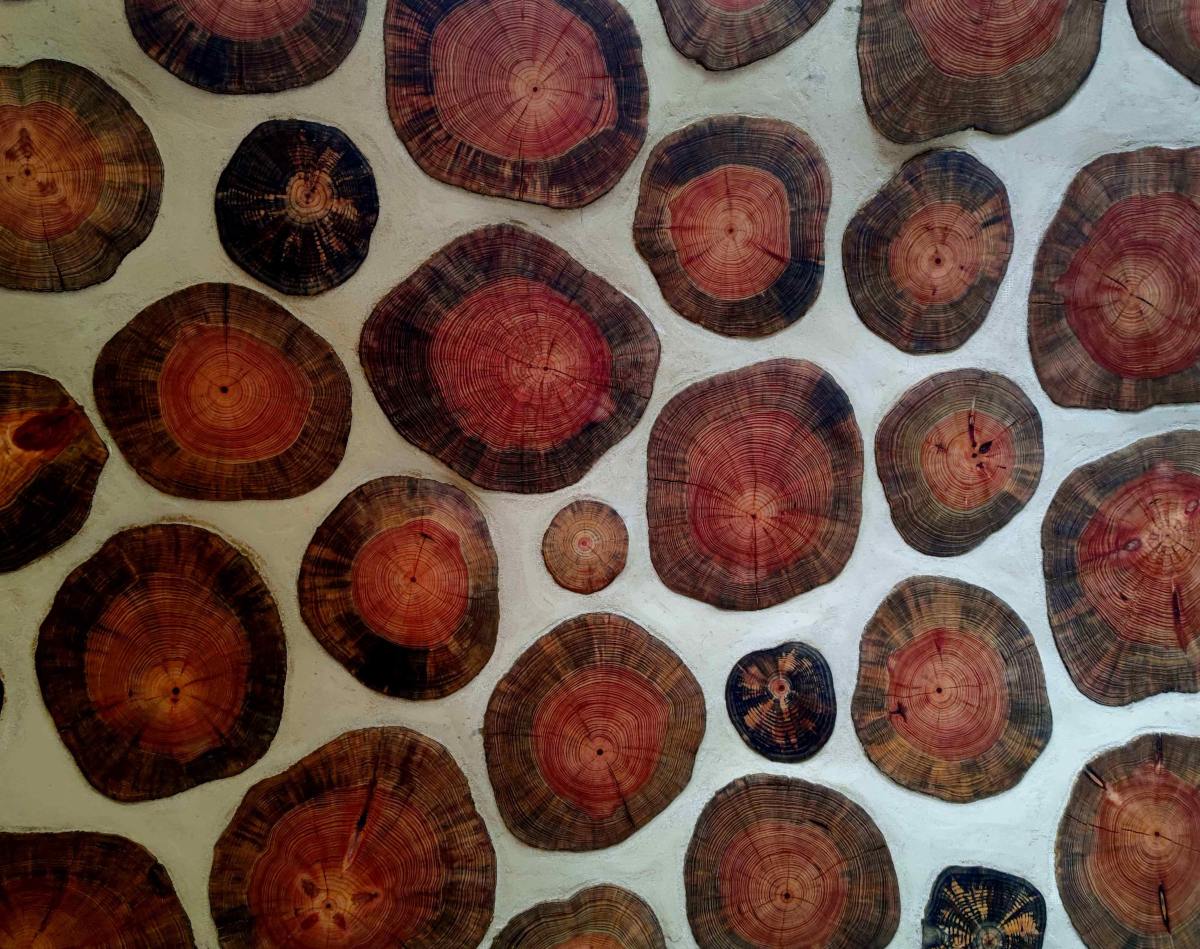
Log ends as building material
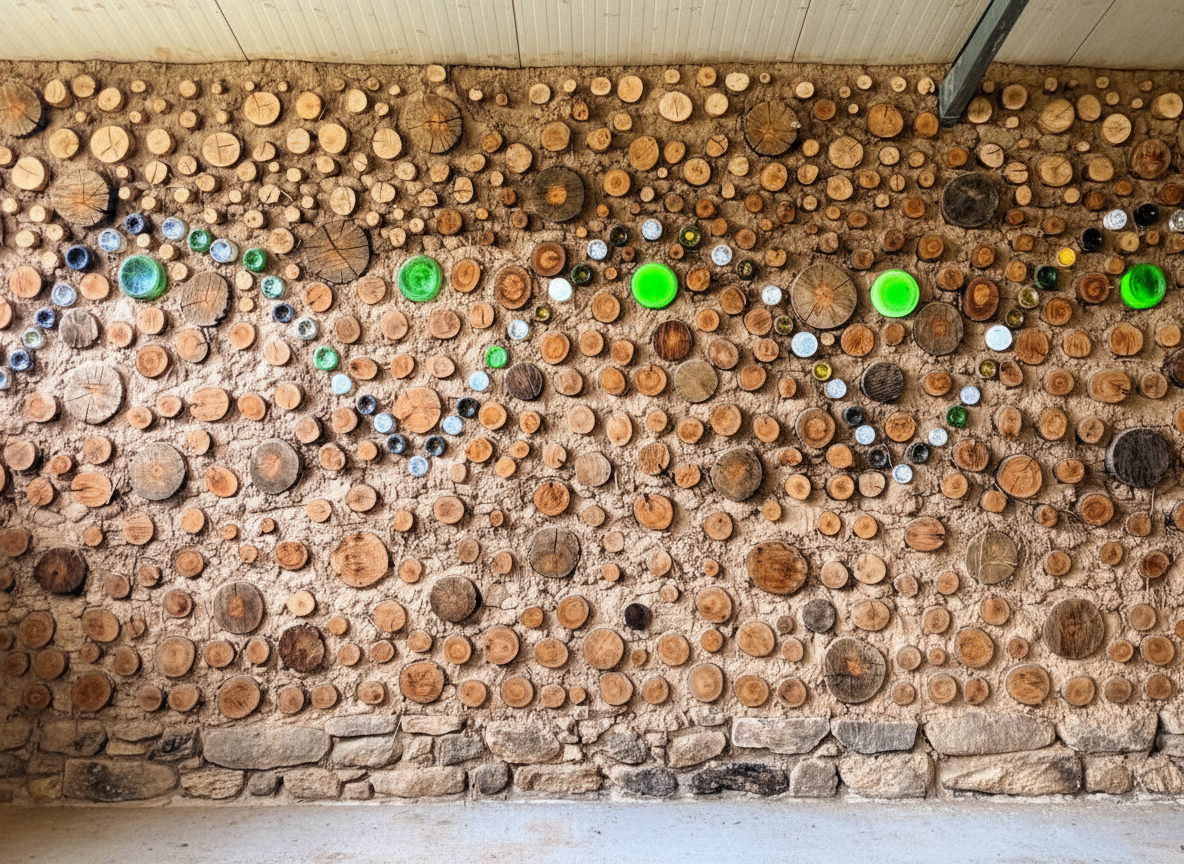
In cordwood construction, short log ends are placed crosswise into the wall and bonded with mortar – layer by layer, until a solid wall takes shape. The result: a distinctive pattern of wood cross-sections that makes every wall genuinely unique.
Glass bottles or coloured elements can also be incorporated, creating beautiful light effects from inside.
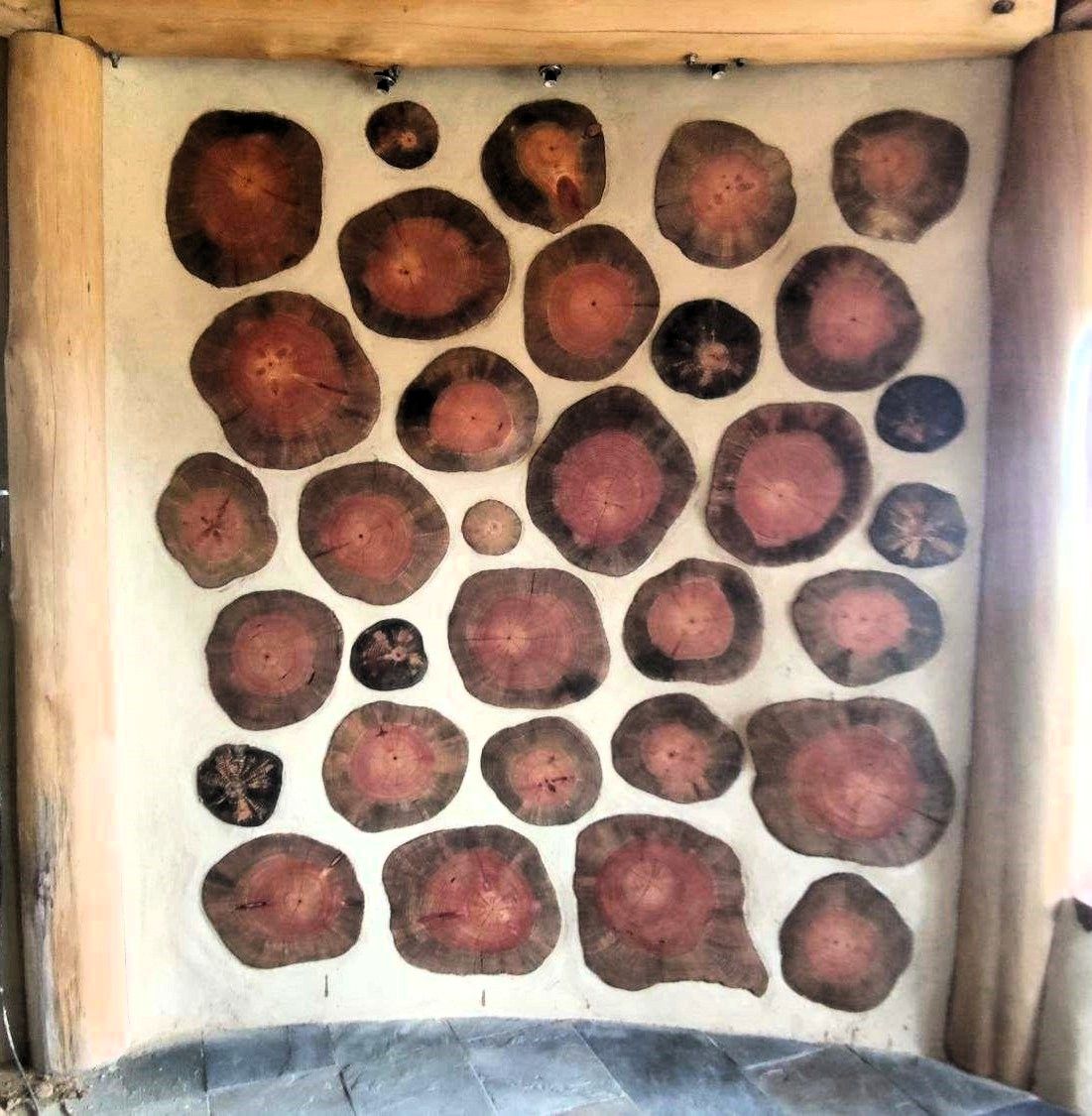
Wood & Mortar
The Wood
Lighter, less dense woods are preferred – they tend to expand and shrink less and offer better insulation values. The wood must be as dry as possible; bark should be removed to prevent rot and insect infestation.
- Especially recommended: cedar and pine
- Other softwoods also work well
- Over 30 different wood species usable
- Prefer local woods for sustainability
The Mortar
- Cement mortar: cement, lime, sand and sawdust
- Lime mortar: lime putty (lime, sand, optionally cellulose) or hemp-lime mortar
- Clay mortar: cob mix of sand, clay and straw
At Earth to Wall, we deliberately avoid cement – which is why we work exclusively with lime and clay mortars. Both are vapour-permeable, ecologically sound, and sit in perfect harmony with the natural character of cordwood construction.
How it is built
- Determine wall thickness (typically 40 cm)
- Apply 10 cm thick mortar layer on both sides
- Embed log ends through the full wall thickness
- Fill gaps with insulation material (sawdust, straw-clay mix or sheep's wool)
Two methods
- Classic solid wall: Log ends embedded directly in a solid wall, gaps filled with mortar.
- Double wall method: Two thinner cordwood walls parallel to each other, the cavity between them filled with insulation – for even better thermal performance.
Why Cordwood?
- Every wall unique – individual and beautiful
- Local materials: waste wood, clay, lime
- Easy to learn – ideal for self-builders
- Light effects possible through incorporated glass bottles
- Solid, long-lasting and easy to repair
From Scandinavia to North America
Cordwood has its roots in Scandinavia and Eastern Europe, where timber was plentiful. Settlers brought the technique to North America – cordwood houses from the 19th century still stand in Wisconsin and Quebec today.
The technique is now enjoying a revival in the ecological building world. The combination of a straightforward method, locally sourced materials and striking aesthetics makes it particularly appealing for self-builders and sustainable projects.
Want to go deeper?
In the newsletter I regularly share practical knowledge, projects and tips on natural building and renovation.
Subscribe to newsletter →