Earthen Floors
Warm underfoot, calm to look at and good for your home.
Floor types
Poured earthen floor
Floor types
Clay tiles
Poured earthen floors and clay tiles
Earthen floors are among the oldest floors there are, and one of the most comfortable ones you can put in your home today. Both types start with a simple recipe: a binder (clay), an aggregate such as sand and gravel, and sometimes fibres like straw or hemp, depending on the mix.
No cement, no synthetic additives, and still a floor that stores warmth and feels great under bare feet. Once dry, the floor is usually sealed with natural oil and, if you like, wax.
Poured earthen floor
Seamless, smooth and warm
A poured earthen floor is mixed as a flowing clay mortar, poured into the room and levelled. It dries into one continuous, jointless surface that looks calm and minimal, which is why it works especially well in larger rooms.
Once it has dried, you seal it with natural oil and, if you like, wax. That is what gives the floor its warm, slightly silky sheen and makes it easy to care for.
- ✓Jointless, calm surface
- ✓Warm sheen from natural oil and wax
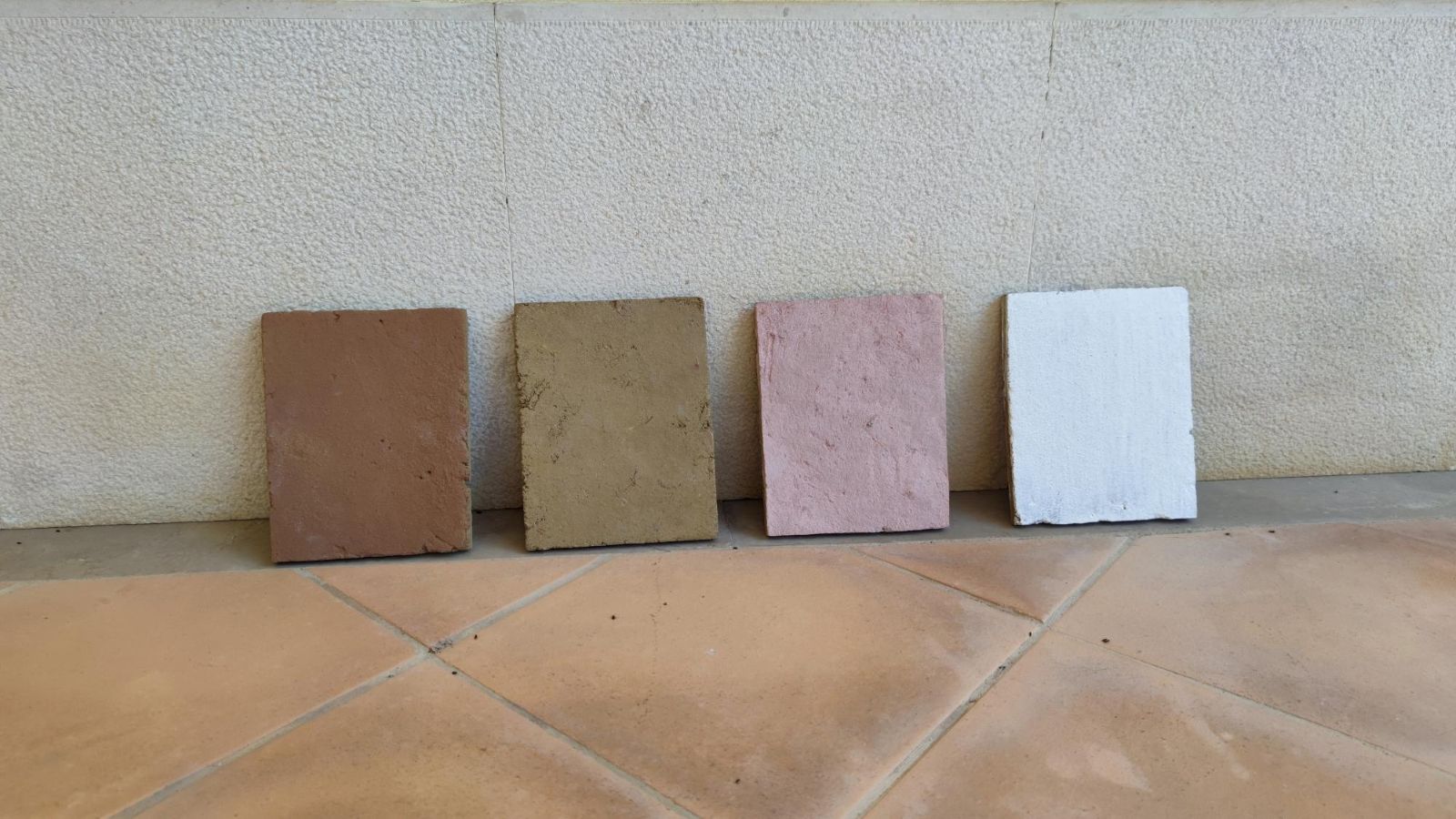
- ✓Can be coloured with earth pigments
Clay tiles
Air-dried, with a natural look and visible joints
Clay tiles are made from the same ingredients as the poured floor, but they are formed individually and dried in the air, with no kiln involved. They are then laid in a bed and finished with oil or wax.
That makes them very flexible: you can work room by room, set patterns, and replace a single tile if one ever gets damaged. The joints give the floor a lively, handmade character.
- ✓Single tiles can be replaced
- ✓Different earth tones and patterns possible
- ✓Easy to do room by room
What both floors have in common
Whether poured or tiled, both floors share the same idea: natural materials that work with the building and the people living in it, not against them. They are most at home on a stable, dry, load-bearing base.
Stores warmth
The thick clay layer takes up heat and releases it slowly. Pleasantly cool in summer, supportive in winter.
Works with underfloor heating
Underfloor heating can be integrated in a poured earthen floor during installation.
Free from harmful chemicals
No solvents and no synthetic additives, which makes it a good choice for allergy-sensitive households.
Design freedom
From soft and velvety to lively and earthy. Natural pigments let you adjust the colour.
DIY-friendly
With good guidance and a bit of practice you can install an earthen floor yourself.
Build your own earthen floor: the course is coming
A hands-on course covering poured earthen floors and clay tiles is in the works, as part of the Earth to Wall School. Sign up for the newsletter to hear about it first and grab your early-bird discount.
Subscribe to newsletter